
Content note: This story discusses body shaming, sexual assault, and exploitation under the guise of medical treatment.
Privacy note: This story is shared anonymously. Identifying details may have been changed or omitted to protect the storyteller’s privacy.
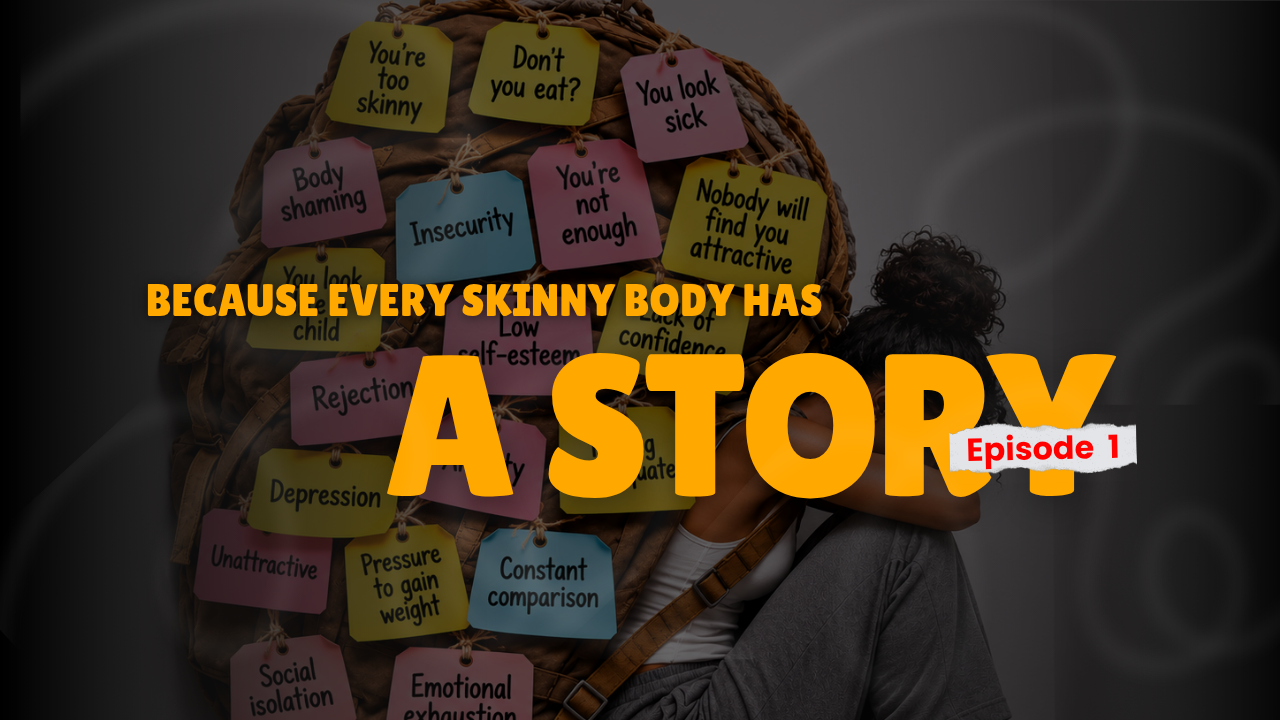
In 2014, I was 21, a university student in Enugu, and desperate to gain weight. That feeling had begun around 18 or 19, when I became increasingly conscious of my body and how different it looked from what I thought a woman’s body should look like.
I was skinny very skinny, at least in my own eyes then. I had a pretty face, but I did not have the curves I wanted. My breasts were small, my hips were narrow, and my buttocks were practically nonexistent. I was what people would describe as flat, both in front and behind, and people had opinions about it.
The comments, the body shaming, and my experiences with the opposite sex gradually made me believe that something needed to change.
Looking back now, at 33, I sometimes go through my old pictures and wonder what exactly I was so unhappy about. I was not bad-looking. I was a young woman in my early twenties. But that was not how I saw myself then.
By the time I turned 21, I had already tried syrups, pills, and other weight-gain products, including some I found through online vendors. I did not understand how they worked; I only knew they were being sold for weight gain.
I also believed I was eating a lot. In my mind, I was doing everything I could, yet my body was not changing the way I wanted.
Because I was constantly searching for weight-gain products, my social media feeds filled with vendors promising bigger hips, bigger buttocks, breast enlargement etc sometimes within days. Others advertised what looked like more specialised treatments and that was how I came across a particular vendor.
He operated what appeared to be a pharmacy in Lagos and presented himself as a doctor. To understand why I trusted him, you need to understand something about where I grew up.
I grew up in Eastern Nigeria, where many people commonly referred to pharmacists as doctors. If someone owned a pharmacy, wore a lab coat, attended to customers, and seemed knowledgeable about medication, it was not unusual for people to call that person a doctor.
That was the understanding I grew up with. So when I encountered this man, I did not approach him with the suspicion I might have today.
He had a business. He advertised products. He appeared knowledgeable. We communicated, had consultations, and discussed what I wanted to achieve. I had seen enough of him through our interactions to believe he was a real person running a real business.
He explained that he offered treatments for weight gain particularly body enlargement for women.
One particular treatment he recommended caught my attention. He said it involved inserting a pill into my vagina, alongside an injection that would work with the pill to produce the desired result.
There was a complication, though. He explained that the pill needed to be inserted deeply and suggested that a boyfriend could help with that part of the treatment.
I did not have a boyfriend, so for some time, I did not proceed.
Besides, the treatment required me to come to Lagos in person, and travelling to Lagos was not something I could simply wake up and do. I was a student, I did not have enough money to finance the trip comfortably, and I had never travelled that far on my own. I was also extremely conscious of security.
I grew up with strict limits. Sex was not discussed, and my movements were tightly controlled. I was protected, but also naive.
At 21, I did not have the sexual knowledge or experience that would have helped me recognise certain forms of exploitation. I understood that I should not allow a man to touch me inappropriately, but I understood very little about sexual intercourse, medical boundaries, or how someone could disguise sexual activity as treatment.
At the time, Facebook was a place where people could build relationships through conversations and photographs, even without meeting physically. I had several pictures on my profile, but most were headshots. I rarely posted full-body photographs, so people could see my face without necessarily knowing what the rest of my body looked like.
This had caused problems for me before. I had experienced situations where guys seemed interested in me through photographs and conversations, only for their attitudes to change after meeting me physically. Their disappointment had something to do with my body.
So when a particular friend I had been talking to, invited me to Lagos, I saw an opportunity. He offered to cover my transportation expenses, and because I already had the weight-gain treatment in mind, I decided I could combine both purposes into one trip.
I would visit my friend, spend some time with him, and then go for the treatment before returning to school.
I contacted the man at the pharmacy, who claimed to be a doctor, and told him I would finally be coming to Lagos. We made arrangements. Everything seemed straightforward. I had no reason, at least in my mind, to imagine what would eventually happen.
The visit that did not go as expected
When I arrived in Lagos, I went to the friend’s. I had expected to spend more time with him, but within about two days, things became uncomfortable.
I could sense a change in his attitude towards me. He did not seem as interested or welcoming as he had been during our conversations. It felt as though my presence was inconveniencing him.
Because I had experienced similar reactions before, I believed I understood why. He had seen my face in photographs, probably imagined the rest of my body a certain way, and now that he had met me physically, he was not impressed. That was how I interpreted his behaviour. Eventually, I decided to leave earlier than planned.
What made the experience even more disappointing was what happened afterwards. He did not check whether I had arrived safely at my next destination and did not seem particularly concerned about where I was going. I remember trying to reach him later, but the relationship never recovered.
Once again, I found myself dealing with that familiar feeling of being rejected because of my appearance. If anything, the experience reinforced my determination to change my body.
I still had the appointment with the man at the pharmacy, so I went ahead with it.
I had already told him I was coming, and we communicated by phone as I made my way there. When I arrived, he welcomed me warmly. He wore a lab coat, and the pharmacy was much bigger than I had imagined.
It had separate sections for regular medicines and medical supplies, skincare products, weight-loss products, and weight-gain products. The weight-gain section included syrups, powders, creams, pills, etc
Seeing such a large physical shop with many products made the business appear established. He was not simply someone selling one mysterious product from a social media page. At the time, that increased my confidence in him.
He had an attendant, and there were customers in the pharmacy when I arrived. He attended to one or two people before directing me into an enclosed office behind the main shop.
The office had a desk, a chair, and an examination couch, similar to the kind you might find in a clinic. He asked me to sit and wait. So I did.
After some time, he came into the office. He had a pill and, as far as I can remember, an injection.
He went over the treatment again, reminding me of what we had discussed and what I wanted to achieve. He explained that the pill would be inserted into my vagina and that the injection was supposed to work alongside it.
Then he told me how he intended to insert the pill. He said he would first put it in with his finger, but that he would need to use his penis to push it deeper.
He presented this as part of the treatment, and I believed him.
I know that might be difficult for someone reading this today to understand. How could a 21-year-old hear something like that and not immediately recognise that something was wrong? But I genuinely did not.
I had gone there believing I was meeting a doctor for a body-enlargement treatment. He had explained the procedure in advance, and I had accepted his explanation as medical information. I did not have the knowledge to question it.
He asked me to sit on the examination couch and position my legs apart. He inserted the pill with his finger. Then, as he had described, he penetrated me with his penis.
The penetration lasted only a short time, perhaps two or three minutes. When he withdrew, I noticed a discharge. I remember that he gave an explanation for it, but I can no longer recall exactly what he said. At the time, I accepted whatever explanation he provided.
He dressed, returned to the front section of the pharmacy, and told me I could come out whenever I was ready. And that was it.
As far as I understood, I had received the treatment I had travelled to Lagos for. I did not leave that office thinking I had been sexually assaulted. I did not even understand that what had happened was sexual intercourse disguised as a medical procedure. I believed I had undergone a treatment that would help me gain weight and develop the body I wanted.
I returned to school and resumed my normal life. Classes continued. Days passed, then weeks, and nothing happened.
I did not gain weight. My hips did not become fuller. My buttocks did not increase in size. There was no visible transformation. The treatment I had travelled all the way to Lagos for had done absolutely nothing.
I cannot remember exactly how communication with the man ended. Perhaps I contacted him after two or three weeks to complain that nothing had changed. Perhaps we simply stopped communicating. I genuinely do not remember. I was still a student, and life continued.
I also cannot remember experiencing any immediate illness that I associated with the procedure. I did have a skin reaction around that period, but I would not attribute it to what happened at the pharmacy. I experienced similar reactions on later visits to Lagos, so I do not know what caused it.
There were so many unusual experiences packed into that one trip that it became impossible to forget. But for several years, I did not understand the most serious thing that had happened.
It took me years to understand
It was about three or four years later, as I gained a better understanding of sex and sexual relationships, that I began to reconsider what had happened in that office. I started putting things together.
There was no legitimate weight-gain treatment that required a man to penetrate a woman with his penis to push a pill deeper into her vagina. What I had believed was a medical procedure was not a medical procedure at all.
The man had used my desire to gain weight, my trust in his supposed medical knowledge, and my lack of sexual information to exploit me. I began to understand that I had been sexually assaulted.
As I learned more about sex, I also began to suspect that the discharge I noticed afterwards may have been semen from ejaculation. I later wondered whether the pill might have been a contraceptive and whether the injection was related to preventing pregnancy.
Those were suspicions I developed years later. I never confirmed what the pill or injection contained, or even whether the injection I remember seeing was administered.
What I do know is that the promised weight-gain treatment did not work, and the sexual penetration was presented to me under a false medical explanation. That realisation changed how I understood the entire experience.
Even today, Lagos is a place I struggle to feel comfortable about. I have visited again since that experience, and I still associate the city with fear and insecurity.
I sometimes describe my relationship with Lagos as a kind of lingering trauma from that first experience. I cannot say that every uncomfortable feeling I have about the city comes from what happened at the pharmacy. The entire trip was stressful in several different ways.
Today, when I look at pictures of myself at 21, I see a young woman who was so unhappy with her body that she was willing to go to extraordinary lengths to change it.
Sometimes I ask myself why. I was not ugly. I was not defective. I was simply skinny. But I had allowed other people’s comments, expectations, and reactions to shape how I saw myself.
I wanted fuller hips, bigger buttocks, and a body that I believed would make me more attractive and acceptable. I thought changing my body would change how people treated me.
That desperation took me through several experiences, If there is one thing I wish I had understood at that age, it is that confidence does not have to come from the way your body looks. I wish I had known that I could be confident, outspoken, driven, and focused without needing fuller hips or a bigger backside.
I wish I had understood that I could learn to dress the body I already had in ways that made me feel beautiful. Most importantly, I wish I had known that other people’s opinions did not have to determine how I felt about myself.
Today, I am very different. At 21, I was desperate to change my body because I wanted people to see me differently. At 33, I understand that I never needed their approval to begin with.
I can want to change something about my body without hating the body I have. And I can pursue that change without allowing desperation to make decisions for me.
It took me years, and some very difficult experiences, to understand the difference.
~Anonymous, 33
This story illustrates something important about body image and the desire to gain weight.
There is nothing inherently wrong with wanting to gain weight, build muscle, or develop a fuller figure. These can be perfectly reasonable personal goals.
The concern begins when the desire to change becomes so emotionally urgent that a person feels compelled to pursue unverified treatments, overlook warning signs, or place trust in someone making unrealistic promises.
A legitimate weight-gain or body-enlargement treatment does not involve a healthcare provider penetrating a patient. Presenting sexual intercourse as a medical procedure is exploitation, not healthcare.
Syrups, pills, injections, creams, and other products marketed for rapid weight gain or localised enlargement are not automatically safe or effective simply because they are sold in a pharmacy or advertised by someone wearing a lab coat.
Healthy weight gain generally requires appropriate nutrition, sufficient energy intake, and attention to individual health needs. Resistance training can support muscle development, but no food or supplement can guarantee fat gain in one particular part of the body.
Finally, body shaming can have consequences that extend far beyond hurt feelings. It can affect how people see themselves, whom they trust, and the decisions they make about their health.
The goal should never be to make someone feel that their body must change before they deserve respect, affection, or confidence.
Weight Gain & Recovery



We are a compassionate companion on your journey to holistic health, offering personalized solutions, expert guidance, and unwavering support.